Exploring Black Sabbath’s Originality, Their Relationship to Heavy Metal, and Their 15 Best Songs

Discussing the band’s pioneering legacy; their position in heavy metal and hard rock (and my relationship to both genres); covers of Black Sabbath songs from unexpected sources; and then wrapping up with their 15 best songs.
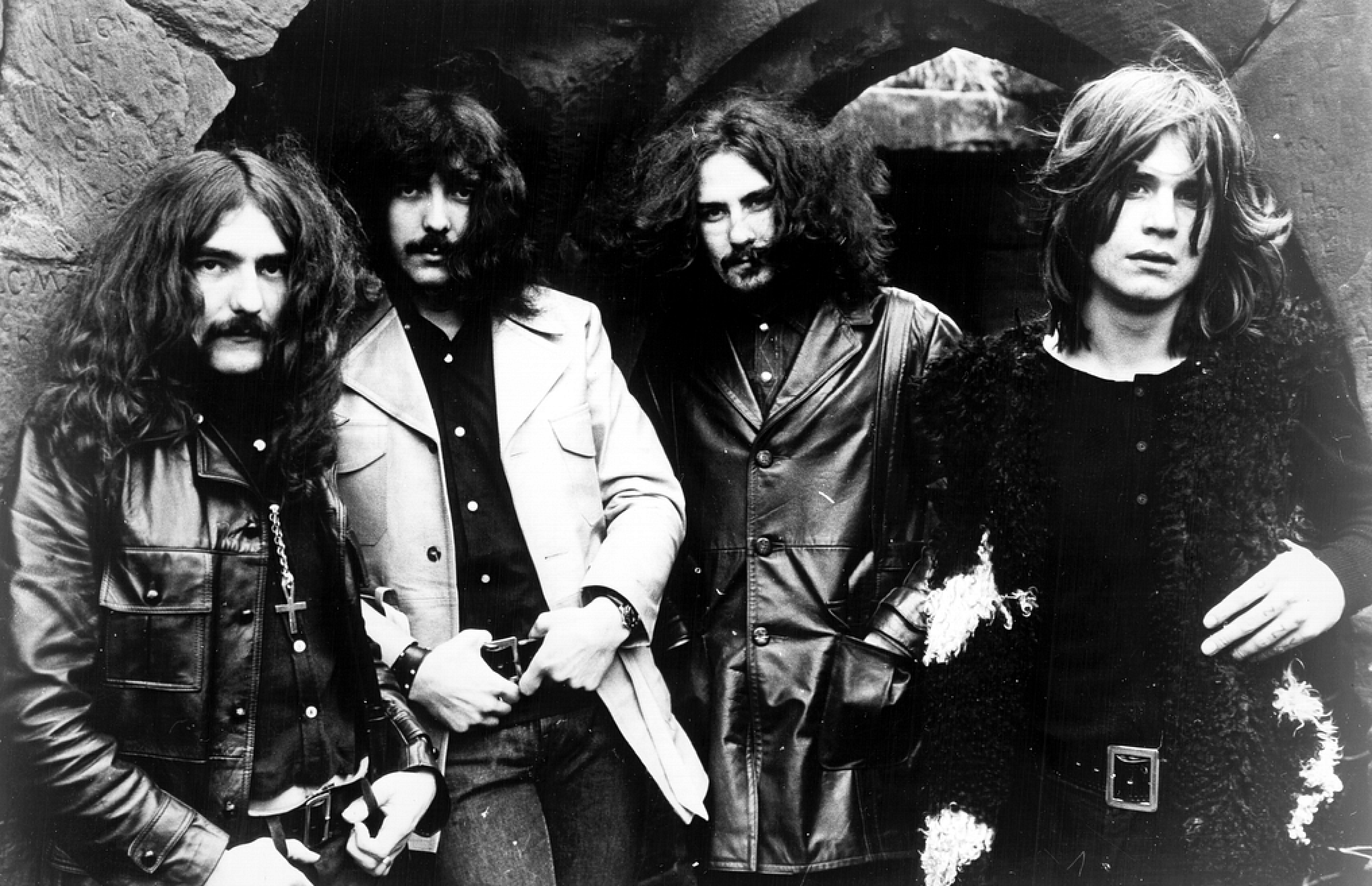

(Photo courtesy of Billboard, page 7, 18 July 1970)
 

Black Sabbath’s Pioneering Legacy and Their (and My) Relationship to Heavy Metal

Last month, Ozzy Osbourne finally succumbed to the death he had eluded for so long, at the age of 76. Ozzy became a cultural phenomenon outside the realm of music — a popular reality show and biting the head off of a bat will do that to you. But I couldn’t care less about any of that. The only thing I really care about is the music, because it was innovative, it was influential, and it was just plain good.

Since his passing was announced, I’ve been blasting Ozzy-era Black Sabbath non-stop, and it got me thinking: whenever I think of musical artists that were “ahead of their time,” it’s not Bowie, or the Kinks, or the Velvet Underground that come to mind first — though they all certainly qualify. The first group I think of is Black Sabbath.

No one sounded like them. Yes, there was Cream, Jimi Hendrix, Led Zeppelin, Blue Cheer, bands making a heavier and more distorted form of blues rock, but no one had turned the dials up on that formula and combined it with the sense of dread that Black Sabbath did. The riffs were thick and chewy, the lyrics were haunting, and Ozzy’s vocals were primal. He wasn’t the most technically proficient singer, a la Robert Plant, but his voice had a gravitas that drew you in, excited you, scared you.

Obviously you could hear the horror in Sabbath’s music, but you could also see it. I mean, just look at the mustaches and the crosses. Look at Ozzy while he belts “War Pigs.” And look at their debut album cover! I can’t believe the label let them use that cover. Legitimately scary.

Black Sabbath’s frightening debut album cover (1970)

They were true pioneers, tapping into a sludgy doom that people didn’t even know was possible yet. And it resonated, big time. Despite critics panning the band (like Lester Bangs of Rolling Stone calling the music “claptrap”), album sales were huge. Fellow outcasts, weirdos, and the working class felt Sabbath’s music within their bones. Rob Halford, frontman for Judas Priest, one of the many heavy metal bands indebted to Black Sabbath, put it best. “They were, and still are, a groundbreaking band. You can put on the first Black Sabbath album and it still sounds as fresh today as it did 30-odd years ago. And that’s because great music has a timeless ability: To me, Sabbath are in the same league as the Beatles or Mozart. They’re on the leading edge of something extraordinary.”

My teenage friend group loved heavy metal, and even played in a Metallica-inspired metal band in high school called Revelation. While I appreciated the genre, and had songs that were favorites of mine — Metallica’s “For Whom the Bell Tolls,” Motörhead’s “Ace of Spades,” pretty much anything by the aforementioned Judas Priest — I could never fully sink my teeth into lots of the most popular forms of metal, especially thrash metal like Slayer, Pantera, or Anthrax. The musicality was impressive, but it only spoke to me in bits and pieces.

So why did I adore Black Sabbath (and still do), when they were the originators of metal, a genre I’m only mildly interested in? It’s because their brand of metal was still in its infancy, still yet to fully branch off of “hard rock,” a genre I am passionate about. Metal hadn’t evolved into the thrashing, head-banging ecosystem it is today. That grey area between metal and hard rock hits a sweet spot for me — less pummeling, but still full of heavy riffs, booming drums, and howling vocals. Judas Priest’s radio-friendly hits often fit into that grey area, along with bands like AC/DC, Led Zeppelin, Deep Purple, Heart, and Van Halen.

I would argue that Black Sabbath, despite being the first metal band, actually align more closely with “hard rock” than “metal,” particularly in those ’70s-era Ozzy days (as opposed to the more full-blown metal they would embody after firing Ozzy and employing singers like Ronnie James Dio in the ’80s). Their self-titled debut (the one with the creepy album cover) has the bluesy, harmonica-laden “The Wizard,” as well as “N.I.B.,” which takes the psych-rock sound of Cream’s “Sunshine of Your Love” and makes it nastier. Then they released Paranoid — the platonic ideal of “hard rock” (also their best work and quite possibly a top-ten-all-time album for me). Tony Iommi’s riffs are gigantic throughout, but they’re also chunky and tactile, still coated in the blues in a way that most metal is not. Bill Ward’s drum fills are too dry, and Geezer Butler’s melodic bass is too vibrant to be considered metal.

After those first two albums, flickers of metal begin to surface, but those flickers are channeled through a hard rock filter, which is just how I like my metal. It’s thrilling to listen to Master of Reality, Vol. 4, and Sabbath Bloody Sabbath, and get little tastes of the metal that would sprout forth a decade later — the filthy midsection of “Sabbath Bloody Sabbath,” the trudging doom of “Into the Void”, the inevitable gallop of “Supernaut,” or the relentless onslaught of a riff on “Children of the Grave.”

The fact they were making songs as heavy as “Children of the Grave” as early as 1971 just blows my mind. Only ten years earlier, the heaviest rock and roll in existence was surf rock. In the earliest years of the 1960s, bands like the Beatles and the Kinks were barely blips on the radar. The doom and gloom of Black Sabbath couldn’t have even been conceived in anyone’s wildest imagination.

Their impact was immense, their level of “metal” was perfect, and their songs were excellent.
  

Unexpected Black Sabbath Covers

Black Sabbath is obviously tremendously influential for any metal band that has existed, but their reach was wider than you might think. Here are a few great Sabbath covers from non-metal artists.

The Cardigans: “Sabbath Bloody Sabbath” / “Iron Man”

Swedish pop rock band The Cardigans, of “Lovefool” fame, covered quite a few Sabbath songs, including an airy take on “Sabbath Bloody Sabbath,” and a groovy “Iron Man.”


Charles Bradley: “Changes”

Charles Bradley, the soul singer who channeled James Brown so effectively that he impersonated him on stage at local clubs, miraculously got his music career off the ground in the 2010s, when he was already in his 60s, before passing away in 2017. The original “Changes” was already an outlier in Sabbath’s catalog — a maudlin ballad with nothing more than piano, mellotron strings, and bass. Its minimalist nature made it a perfect blank canvas for Bradley to turn it into a completely natural sounding, 1960s-style rhythm & blues track.


T-Pain: “War Pigs”

T-Pain covered Black Sabbath. Yes, you read that right. T-Pain. The 2000s R&B hitmaker lends his autotune-less voice to a straight, mostly unchanged, live rendition of “War Pigs,” and kills it. Absolutely kills it. Ozzy himself said it was the “best cover of ‘War Pigs’ ever.”


The 15 Best Black Sabbath Songs

Honorable Mention: “Killing Yourself to Live” (Sabbath Bloody Sabbath, 1973)
 

15. “Junior’s Eyes” (Never Say Die!, 1978)

“Junior’s Eyes” is from Ozzy Osbourne’s last album with Sabbath before the band fired him for his alcohol and drug use (though the other members didn’t have much of a leg to stand on in that department). Never Say Die! is often maligned as being below the standard of their early albums, and it is, but there are some gems, especially the groovy, bass-heavy, hard rock masterpiece “Junior’s Eyes.” It was never a hit, but it should have been — that soaring chorus would fit right in on classic rock radio.


14. “Tomorrow’s Dream” (Vol. 4, 1972)

If you want a short, straightforward Sabbath song, with a fat, simple riff, then “Tomorrow’s Dream” has you covered.


13. “After Forever” (Master of Reality, 1971)

Black Sabbath were often unfairly maligned for being Satanists, but the band members were actually more Catholic than you would expect, and never more overtly so than on “After Forever.” Just look at these lyrics: “Perhaps you’ll think before you say / ‘God is dead and gone’ / Open your eyes, just realize / That He is the one.” Doesn’t really sound like a Satan-worshipper to me! But that doesn’t really have any effect on my opinion of the song. I like it because the bass weirdly sounds like “Paperback Writer.”


12. “The Wizard” (Black Sabbath, 1970)

Led Zeppelin weren’t the only ones singing about Lord of the Rings — bassist and lyricist Geezer Butler says he wrote this about Gandalf. Also, unless my research failed me, this is the only song on Sabbath’s first four albums where Ozzy played an instrument — that bluesy harmonica.


11. “Planet Caravan” (Paranoid, 1970)

Congas, flute, piano — not instruments you usually hear from a supposed “metal” band, but “Planet Caravan” puts other underappreciated dimensions of Black Sabbath on full display. Despite no riffs to be found, the jazzy psychedelia here still boasts plenty of Sabbath’s spooky aura.


10. “Supernaut” (Vol. 4, 1972)

Whenever “Supernaut” comes on, it’s literally impossible not to ferociously head-bang. It just rocks too hard.


9. “Jack the Stripper / Fairies Wear Boots” (Paranoid, 1970)

Anyone who wants to slag on Ozzy’s talents should just listen to his chilling vocals on the swinging “Fairies Wear Boots.” He recounts the tale of how “suddenly, [he] got a fright,” and the terror is right on the surface. Bill Ward went crazy on those drum fills too.


8. “Into the Void” (Master of Reality, 1971)

Of the various subgenres of metal, my favorite is probably “doom metal,” characterized by slow, thick, down-tuned guitar riffs. “Into the Void” is the quintessential doom metal prototype. James Hetfield, guitarist for Metallica (notably, more of a thrash metal than a doom metal band), says this is his favorite Sabbath song.


7. “Snowblind” (Vol. 4, 1972)

The most blatant “cocaine” song in their catalog — just in case you find “Feeling happy in my vein / Icicles within my brain” to be ambiguous, Ozzy helpfully whispers “cocaaaiiine” to get the point across. “Snowblind,” and all of Vol. 4, has a sandpapery, treble-heavy, exciting guitar sound — I can hear the beginnings of grunge, can picture Kurt Cobain hearing “Snowblind” and trying to get that sound on Nevermind.


6. “Sweet Leaf” (Master of Reality, 1971)

It’s fitting to follow Sabbath’s most blatant “cocaine” song with their most blatant “marijuana” song. Tony Iommi’s immortal reefer-laden coughs are followed by one of the sickest riffs you can imagine, as Ozzy wails “ALRIGHT NOW!” and “I LOVE YOU!” to his beloved sweet leaf.


5. “N.I.B.” (Black Sabbath, 1970)

As I alluded to before, the “N.I.B.” riff is like if “Sunshine of Your Love” had an evil twin. When you combine Geezer Butler’s absolutely filthy bass solo opening with Ozzy’s conviction and that guitar riff, it’s hard to find a more hair-raising song anywhere.


4. “Sabbath Bloody Sabbath” (Sabbath Bloody Sabbath, 1973)

I mentioned this song earlier, when talking about the “flickers of metal” in Sabbath’s early music. I just can’t believe how a song from 1973 can be this heavy in the middle section (which you can hear at 3:19 in the track). But the rest of the song is amazing too — Ozzy’s howling over the main riff, followed by an almost sweet and pensive acoustic section. And then, there’s that disgusting mid-section (complimentary).


3. “Iron Man” (Paranoid, 1970)

If we’re just ranking Tony Iommi’s greatest guitar riffs, “Iron Man” ranks at #1 (“Paranoid” is #2, “Supernaut” is #3, “Into the Void” is #4, and “Children of the Grave” is #5). In fact, “Iron Man” might have the greatest riff ever created by anyone — apologies to Jimmy Page, Keith Richards, Angus Young, Kurt Cobain, Nancy Wilson, etc. What’s funny is that this song has at least 4 incredible riffs throughout its runtime — Iommi must have said “let me just put everything in here and make it the best electric guitar song ever.”


2. “Paranoid” (Paranoid, 1970)

The story has been told a million times before, but “Paranoid” was an afterthought, written in about a half hour when they needed to fill 3 minutes of empty time on the album that would eventually also be called Paranoid. Greatest afterthought of all time? “Paranoid” is a tightly-wound burst of energy — hard, fast, and insanely catchy, with all four band members firing on all cylinders.


1. “War Pigs” (Paranoid, 1970)

My whole arm has been hurting for a month now, ever since Ozzy’s death, because I can’t stop listening to “War Pigs,” which means I can’t stop vigorously air-guitaring every note and air-drumming every beat. “War Pigs” is a masterpiece. Every piercing riff, every bass groove, every drum fill, and every haunting wail is so freaking satisfying and perfect. While the hippies were preaching peace and love in the face of the Vietnam War, Sabbath were more accurately channeling the horrors of war and more bluntly calling out the perpetrators: “Politicians hide themselves away / They only started the war / Why should they go out to fight? / They leave that role to the poor.” As relevant today as it has ever been.

If you want to hear these 15 tracks, plus a bonus 15 more, enjoy a Spotify playlist of the 30 best Black Sabbath songs:

The 10 Best Elements of 10+ Great Brian Wilson Songs

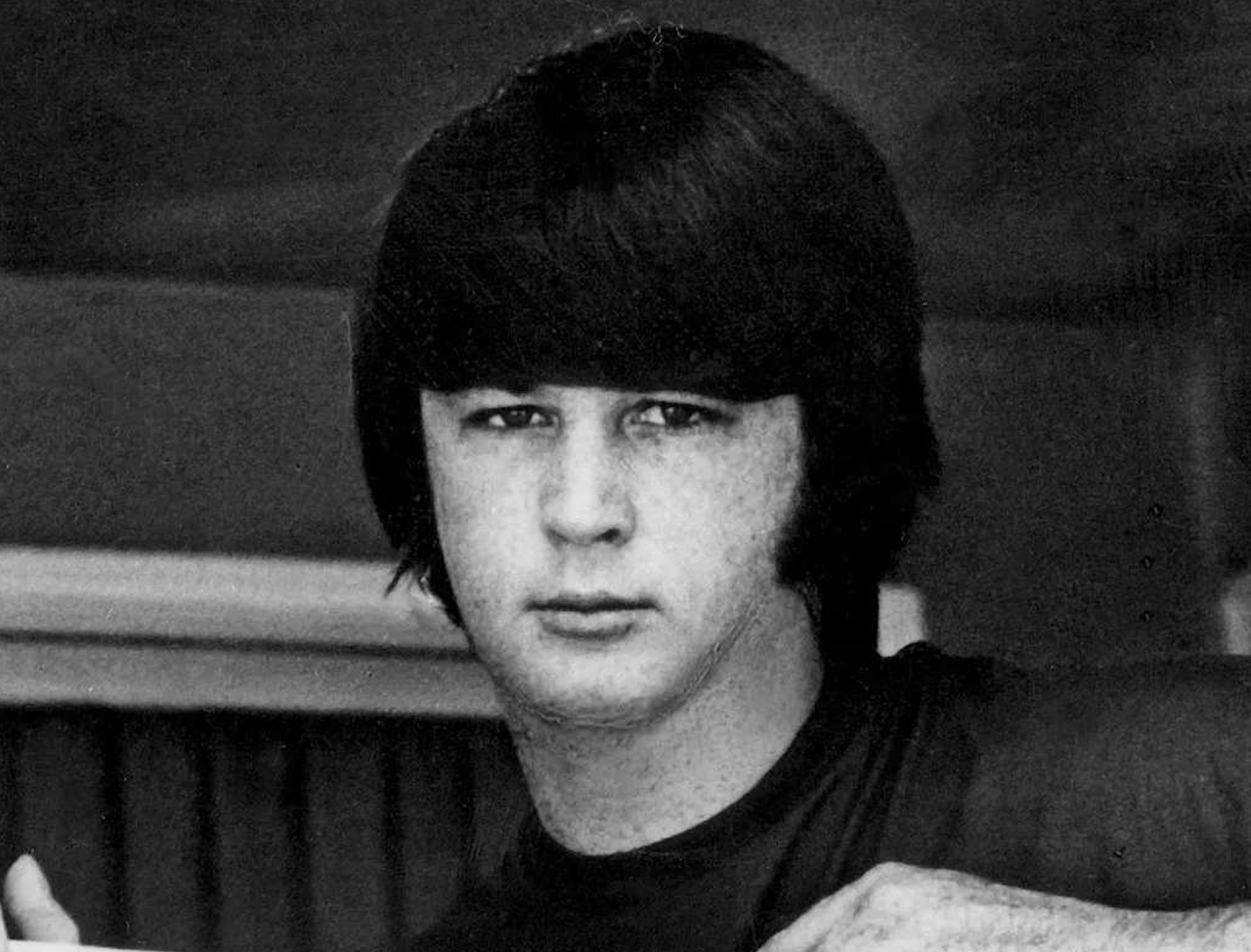
Brian Wilson, who passed this month at the age of 82, was one of the best songwriters and studio wizards of all time. Let’s dive into 10+ of his songs, and what specific aspects made them so great.

10. The nascent “wall of sound” production on “California Girls” (1965)

By 1965, Brian Wilson had fully grown his wings in the studio. He had already come to define the sound of Southern California, and was starting to give that sound more depth and nuance (before taking it even further the following year on Pet Sounds). Phil Spector’s dense “wall of sound” production for groups like The Ronettes and The Crystals was a major influence on Wilson, and you can hear elements of that method here — the echoing production, the thicket of saxophones, the chiming organ. The production is so cohesive and well done that it ultimately ends up being kind of subtle, allowing the great melody and harmonies to take center stage.


9. The bass harmony lines in “Little Deuce Coupe” (1963), “Catch a Wave” (1963), and “‘Til I Die” (1971)

I guess we technically have to share some of the props with Mike Love here, since he’s the one that sang all of these great bass lines. But Brian Wilson is the reason the vocal lines exist in the first place. The bass parts are not content to just hang out on the root note of the chord — they traverse up and down, moving around like a Paul McCartney bass guitar line. It’s so incredibly satisfying to sing along to those bass harmonies. (Bonus: Check out the a cappella version of “‘Til I Die” — the harmonies really shine.)


8. The rhythm and handclaps in the verses, and the harmonies in the chorus, of “I Get Around” (1964)

Does it get any more catchy than “I’m getting bugged driving up and down the same old strip. I gotta *CLAP* *CLAP* *CLAP* *CLAP*…”? I think not. And thank goodness for those handclaps, or we wouldn’t have been able to see Brian Wilson’s brother Dennis so eagerly (and cheesily) clap along in the video below. Go to 1:08 in the video and just look. I feel you, Dennis. If I had to pick one song from their surf/girls/fun era to take with me to a desert island, it would be “I Get Around.”


7. The evocative songwriting and intricate production on all of Pet Sounds, best exemplified by “I Know There’s An Answer” (1966)

Pet Sounds was the culmination of all of Brian Wilson’s desires. After hearing the lack of filler tracks on the Beatles’ Rubber Soul, he wanted to one-up the Fab Four and create the greatest rock album ever made. The complex symphonies in his head, the “wall of sound” production, the personal subject matter — on Pet Sounds, everything came into place. “I Know There’s An Answer” was originally conceptualized as “Let Go of Your Ego,” inspired by an acid trip Wilson took, but Mike Love didn’t want to be involved with such direct references to LSD, so the chorus and title were altered, but the message of introspection remained.


6. The vocal harmonies on “In My Room” (1963)

As early as 1963, while the Beach Boys were still very much in their surf music heyday, Brian Wilson was already writing introspective hymns of unparalleled beauty. The harmonies of “In My Room” are just stellar. The only group that can rival the Beach Boys when it comes to male vocal harmonies is Crosby, Stills & Nash, and this song almost demoralized David Crosby — “When I heard [‘In My Room’], I thought ‘I give up. I can’t do that. I’ll never be able to do that.'”


5. The vocal harmonies that define “Our Prayer” (2004)

“Our Prayer” is the beautiful opener to Wilson’s Smile album, which he originally felt too overwhelmed to finish with the Beach Boys in 1967 and finally re-recorded and officially released as a solo record in 2004. It’s a wordless blast of vocal harmonies, gorgeous enough for an echoing cathedral and powerful enough to level you like a truck. How one person can come up with the chords he’s singing here is beyond me.


4. The melody in “Don’t Worry Baby” (1964)

“Don’t Worry Baby” used to blend in with the pack of early Beach Boys hits in my mind, but over time, the transcendence of its melody started to stand out. That melody expertly conveys the mixture of melancholy and hopefulness in the lyrics. And as usual, the harmonies aren’t half bad either.


3. The piano chords and melody in the “Surf’s Up” demo (1966)

“Surf’s Up” wasn’t on the Beach Boys greatest hits CD I had as a kid, so it wasn’t until later in life that I became familiar with this understated tour de force. It would take more words than I can fit here to recount the winding road “Surf’s Up” took to be released, but to give you a sense, there are at least five different versions that could stake a claim as the “definitive” one. They all vary in both lead singer (Brian or Carl) and production level (full production suite or stripped down), but I came to especially love the early versions that involve Brian singing that sweeping melody over just a piano, playing the most beautiful chord sequence put to tape.


2. The melody and ending vocal interplay in “God Only Knows” (1966)

“God Only Knows” is a perfect song. Paul McCartney thinks it’s the greatest song of all time, and he might be right. And yet, I have it at only #2 here. That’s how good Brian Wilson was. The production on “God Only Knows,” replete with strings, flutes, a French horn, and innovative touches of percussion, would have been impressive enough, but that all takes a back seat because it features exquisite vocal harmonies, as well as one of the best melodies ever written (with a flawless lead vocal provided by Brian’s brother Carl). The last minute of the song, with its three soaring, contrapuntal vocal lines, is simply stunning. Oh, and by the way, I’m not much of a lyrics guy, but his and Tony Asher’s lyrics — the way they invoke God and frame the idea of love — were also groundbreaking for a pop song.


1. The production on “Good Vibrations” (1966)

Pop recording concepts that we now take for granted, like artist-driven studio experimentation, or production being integral to a song’s construction rather than just a means to an end, fully came to fruition when Brian Wilson successfully executed on his expansive vision for “Good Vibrations.” Here are the instruments used on “Good Vibrations”: piano, organ, harpsichord, guitar, electric bass, upright bass, cello, tambourine, shaker, drum kit, timpani, bongos, sleigh bells, piccolo, flute, tenor flute, contra-clarinet, bass saxophone, harmonica, bass harmonica, jaw harp, and, of course, the electro-theremin making that high-pitched “WEEE-OOOH-OOOH-OOOH.” And yet, somehow, Wilson’s production doesn’t feel overdone. No single instrument overwhelms or sticks out like a sore thumb. Every element has its place, every instrument coheres into a triumphant, surprising whole — even that wailing electro-theremin.


Bonus: To get a sense of what it was supposedly like in the studio with Brian Wilson at the helm, here’s a clip from the biopic Love & Mercy where Wilson — played by Paul Dano — obsesses over getting the cello players in “Good Vibrations” to play those triplets just right.

Bonus Bonus: One time on this very blog, I compared Brian Wilson to LeBron James and Pet Sounds to the 2016 Cleveland Cavaliers. To see how I got there, read The Golden State Warriors are the Beatles, in More Ways Than You Know.

Mining for Beauty Within the Noise

Remembering both my grandmother, Mary Bradford, and Low’s Mimi Parker — two women who operated unconventionally within their shared faith — through the lens of challenging music.

My grandmother, Mary Bradford — writer, poet, editor, and teacher — also happened to arguably be one of the greatest Facebook commenters of all time. A few years ago, I shared a YouTube link on Facebook to the song “Heaven” by the Walkmen, calling it “triumphant,” “epic,” “magnificent,” and “a top 5 song of the decade.” The song’s main refrain implores the listener to “Remember, remember / all we fight for.” My grandma commented:

“EXCUSE me — what am I to remember? Being attacked by this noise?”

In classic Mary fashion, she had responded with a takedown as epic as the song itself, eviscerating it in just 12 words.

My grandmother’s comment surprised me. I wouldn’t characterize “Heaven” as a challenging or inaccessible song. After all, it did soundtrack the finale to one of the most popular TV shows of the last decade, How I Met Your Mother, so it has the potential for mass appeal. But I guess, sometimes to the ear of a listener, a song’s inherent beauty or power might fail to emerge from behind a particularly loud guitar, a strained vocal, a deluge of sound effects.

Mary, or “Nama” as she was known to my cousins and me, passed away this month at the age of 92. It’s sad to be without her, but I am heartened by the fact that she lived a full and meaningful life, and I’m incredibly grateful for the 33 years I did have with her.

Notwithstanding her distaste for what I considered to be a beautiful song, in other, more important contexts, Mary Bradford knew how to exist in difficult environments. She made a habit of digging into and reveling in the beauty sometimes hidden in those environments. As a lifelong intellectual and feminist in the Church of Jesus Christ of Latter-day Saints (widely known as the Mormon or LDS church), she often seemed like a walking contradiction to more traditional, conservative members of the faith. (Her life and work were expertly captured in Peggy Fletcher Stack’s Salt Lake Tribune obituary.)

“Some people thought I was a little uppity,” Mary said later on in life. “I should’ve been having more kids instead of trying to write things, you know. I loved the church… I was happy in the church.” Despite operating outside of the traditional norms of the church, she still made a place for herself within its literal and figurative walls. In one of her essays, she wrote, “I formed the notion that the church was ‘my’ church, that it belonged not only to its leaders, but also to me.”

Already a writer, poet, editor, and teacher, Mary served as the editor of Dialogue: A Journal of Mormon Thought in the late 1970s, an independent publication that, at times, generated controversy among church members by publishing scholarly articles that addressed progressive topics such as the place of feminism within the church. She would work with the Dialogue staff to compile the next issue in the downstairs of their house in Arlington, Virginia, while her husband, Charles (“Chick”) would conduct business related to his position as bishop of the local ward in the upstairs of their house. Both provided leadership and engagement with Mormonism, but it was wryly acknowledged within the family that the authorized, church-sanctioned version occurred upstairs and the more tendentious version took place in the less exalted downstairs realm.

In 2015, Mary published a collection of the personal essays she had written throughout her life. In Dialogue’s review of the collection, Joey Franklin aptly summed up my grandmother’s worldview: “[Bradford’s essays read] as a reminder that authenticity depends a great deal on one’s willingness to engage with all aspects of one’s self, and that between the poles of sanctimony and cynicism, there is a hopeful place where art and faith can thrive, not in spite of, but because of each other.”

________________________

My grandmother’s death happened two days after that of Mimi Parker, a core member of Low, one of my favorite indie bands. She passed away at the age of 55 from ovarian cancer. At first glance, there doesn’t appear to be much in common between Parker and my grandma, but when you think of them as Mormon women living unconventionally within their worlds, the similarities start to click.

Mimi (pronounced “MIM-ee”) Parker, and her husband Alan Sparhawk, met in elementary school in northern Minnesota and started dating in high school. Sparhawk grew up Mormon, and actually attended BYU for a year before returning to Minnesota with Parker, who joined the church as an adult. Sparhawk and Parker moved to Duluth and formed the band Low in the early 1990s, serving as the band’s main members for almost 30 years — Sparhawk on guitar and vocals, Parker on percussion and vocals — along with a rotating cast of bass players. They toured the world and gained critical acclaim, but always returned to their humble home base, raising two kids together and growing their deep roots in Duluth.

Parker’s death hit like a ton of bricks, as anyone’s would at her relatively young age, but especially since she was fairly quiet about her diagnosis. She was mourned widely by the music community, including by Robert Plant of Led Zeppelin, Jeff Tweedy of Wilco, Justin Vernon of Bon Iver, and Carrie Brownstein of Sleater-Kinney.

Though Low’s sound evolved over time, the foundation of their music was always Parker and Sparhawk’s entwined, lockstep harmonies. When it comes to vocal harmonies, Low is up in the rafters with the likes of Crosby, Stills & Nash, the Beach Boys, the Mamas & the Papas, and the Beatles. On “What Part of Me,” perhaps my favorite Low song, no note or sound is out of place.

Some singers need the help of a studio to tune their voices, but not Alan Sparhawk and Mimi Parker. When they performed live, their vocals were just as powerful as on their records, if not more so.

Low released 13 albums over the course of their career, and on the group’s last two projects, their sound took a much more distressed turn, as they dialed up the distortion and ran their instruments through filters to the point of making them almost unrecognizable. On the most recent album, last year’s HEY WHAT (my favorite album of 2021), they excelled at letting the beauty of their harmonies and songwriting shine through the static.

If my grandmother didn’t care for the alleged “noise” of “Heaven” by the Walkmen, I can guarantee you she would not take a liking to HEY WHAT. Take “Disappearing” as an example. I think it’s an absolutely gorgeous song, but you might think I’m crazy. I can hear the skepticism now — “How can a song that sounds like a Boeing 777 pulling off a runway be construed as ‘gorgeous?'” It’s because through it all, the backbone of the song is still Sparhawk and Parker’s vocals. The onslaught of processed airplane-hangar guitars that enter halfway through are accompanied by the duo’s celestial harmonies ascending, all amping up to form a cathartic, satisfying climax that makes my hairs stand on end.

“More”, the album’s penultimate track, is an even more extreme example of beauty becoming disguised as it’s caked with production. It’s a song “dominated by a ragged, glitchy, all-consuming guitar riff,” as I wrote last year, naming it the third best song of 2021. “Parker’s hypnotic vocal harmonies make it more than just a droning hard rock song — it’s an alluring, transportive experience… [‘More’] deftly juxtaposes aggressive noise with striking beauty.” In Rolling Stone’s review of the album, Kory Grow summed it up best: “Few bands have stared into the abyss quite like Low, parsing the frailty of the human condition, testing listeners with glacially slow tempos, encrusting beautiful melodies in sparse textures or dissonance. And no band has done so with the same beatific grace as Low.”

Low’s more recent inclination to fill their songs with noise and distortion makes the moments of pure beauty all the more impactful. The process of unearthing these moments as you listen, and feeling their sweet release amid the chaos, is immensely rewarding.

My grandmother would have hated HEY WHAT, but the key to loving the album is not dissimilar to the central tenet for how she lived her life — mining for beauty within the noise.

________________________

Mimi Parker always felt like a real person — unassuming, humble, authentic, just like my grandmother. Parker was a midwestern, Mormon mom with a passion for baking, who happened to also possess a subtly stunning voice and use it in a creatively adventurous, renowned indie rock band. Mary Bradford was a small-statured Mormon mom and grandma who loved the color purple and reveled in everything her progeny did, who also happened to be a prominent and influential writer and thought leader for many church members. They both had creative sparks — Parker through music, Mary through essays and poetry. They both seemed demure, but never hesitated to tell it like it is. If we went out to eat and my grandma wasn’t a fan of the food, make no mistake, she would say so. And Alan Sparhawk, Parker’s husband and bandmate, said of Parker, “She did not suffer boring music. She did not suffer mediocrity.”

It’s not outlandish to think that traditional Mormonism doesn’t necessarily mesh well with intellectualism and exploring challenging ideas (in the case of my grandmother), nor hitting the road to play and record indie rock music (as Parker did). But Mary and Mimi both shared a view that the two seemingly incongruous worlds they each embraced were not only not at odds, but both of them were incredulous at the idea that they couldn’t exist and flourish in both worlds.

It came naturally to Mary to be both an intellectual writer and a Mormon. “In the mind of some, piety and publishing don’t mix—especially independent, scholarly publishing in a church context,” she wrote. “But our response was: They do too mix!”

To Parker, she openly wondered earlier on in her Low career why being Mormon was considered such a peculiarity: “I wonder where the Mormon fascination comes from? In England, that was all any journalist could talk about. And it’s starting to become a bigger deal over here [in the U.S.]. But we don’t get particularly upset about it. People just like to say that we’re this quiet band from Minnesota that is two-thirds Mormon, but hey, you know? We write some songs, too.”

________________________

Whether Parker felt it or not, there is no getting around that being a practicing Mormon in the music business is extremely anomalous. Brandon Flowers is not the norm. I almost teared up while reading the Minnesota Star Tribune and Duluth News Tribune’s accounts of Parker’s funeral, held at the Mormon church in Duluth, because of how familiar the little details of it sounded to me, also a lifelong church member.

Granted, the funeral sounded as familiar as it could be while having dozens of acclaimed musicians sitting in the pews alongside members of the Duluth Ward congregation, but still… a printed recipe for Parker’s famed cream puffs was included with the programs, with some of those cream puffs made and provided by Relief Society members for the service; a photo of the aforementioned rotating cast of bass players in what is very clearly a Mormon church foyer; a tale from David Gore (the Star Tribune labeled him as the “church president,” so knowing that wasn’t true, I verified that he was the Duluth stake president) about the first day he attended church in Duluth when in town for a job interview and hearing Parker and Sparhawk singing “Silent Night” from the pulpit; “How Great Thou Art” being mentioned as one of the hymns played; post-service refreshments in the cultural hall.

If these sound like mundane details, maybe they are, in a vacuum. But it’s not often you hear about an indie musician’s funeral containing elements like these. It’s poignant for me, as both a Mormon and a big fan of Low.

Parker was open about her Mormonism, but never put it front-and-center. Low’s songs often touched on spiritual themes, but were never blatant or preachy — they simply reflected the couple’s own experiences with spirituality and religion. On “Holy Ghost,” Parker examines her inner turmoil and the peace that a spiritual being can bring: “Some holy ghost keeps me hanging on, hanging on / I feel the hands, but I don’t see anyone, anyone / Feeds my passion for transcendence,” Parker sings.

“Now I don’t know much, but I can tell when something’s wrong, and something’s wrong. But some holy ghost keeps me…” She doesn’t finish her sentence at the end, tailing off into “oohs,” but the warmth of the closing chords gives the impression that this holy ghost did its job as a comforter. In an interview on SHEROES Radio, a show that focuses on spotlighting women in music, Parker discussed finding solace in prayer in light of her cancer diagnosis.

Ultimately, especially going through the cancer diagnosis, I really relied heavily on [spirituality]. I would pray, and I really felt like I did receive comfort, and I received help because of those prayers. And I had so many people — friends that were close to me — that were praying for me every day. And I really feel like that made a huge difference.

It seems kind of magical in a way, and it kind of is. But I think we need some magic. We need some magic in this life.

________________________

It’s heartening to see Sparhawk and Parker as examples of well respected and clearly progressive members of my church who lived authentically. At Mary Bradford’s funeral, authenticity was a common theme as well. If she had decided to suppress her personality and beliefs to better fit in with the majority of her fellow church members, then she would have lost the uniqueness that made life meaningful not just to her, but to others on the margins who looked up to her and respected her. She was an anchor for her peers and readers who also didn’t want to follow the status quo. To many, that is her most important work — that she made others’ lives feel valid, because of how she chose to live her life. She impacted others just by being herself.

Shortly after Parker’s death, Sparhawk posted a tweet from Low’s account announcing her funeral.

It was simple, but it hit me hard —a tweet mentioning future plans at the LDS church, right before advocating for equal rights and justice, and being unapologetic about both. It’s something my grandmother would have done. Traditional norms can be hard to navigate when you feel like an outsider, but to Mimi Parker and Mary Bradford, sometimes it’s worth being “attacked by the noise” to unearth the beauty lying just beneath it.

________________________

Book References

Mary Bradford, Mr. Mustard Plaster and Other Mormon Essays, p. 36 & 60.

Other Reading/Listening

My favorite Low songs (Spotify playlist)
Low’s La Blogotheque performance
Low’s NPR Tiny Desk performance
“One Tree,” poem by Mary Bradford
Mary Bradford’s obituary
Salt Lake Tribune’s remembrance of Mary Bradford
Duluth News Tribune’s account of Mimi Parker’s funeral
Slate’s rememberance of Mimi Parker

Thanks to Taylor Parsell for her editing help and added insights.

Our Unique David Bowie Experiences

We can agree on why we all miss him. But we can’t agree on his best work. And that is beautiful.

David Bowie passed away two days ago after an 18-month battle with cancer. I have never been so sad and shocked at the death of an entertainer, which took me a bit by surprise. I’ve never considered myself a Bowie expert or anything, but I’m realizing just how strong of a personal connection I had to the man and his music.

Why do we miss him so much? I think we can agree on a few reasons.

Continue reading

Sufjan Stevens and Our Parallel Memories of Eugene, Oregon

Sufjan Stevens and I share something in common: we both grew up spending summers in Eugene, Oregon. I used to go with my family to visit my grandparents, uncle, aunt, and cousins, often for weeks or months at a time. Stevens went to stay with his mother and stepfather for a few years, from the ages of 5 to 8.

The instant I heard that Stevens’ new forthcoming album, Carrie & Lowell, would center around Oregon, a rush of excitement flooded me (there was even a track specifically called “Eugene!”). Stevens obviously has a history of paying tribute to different states, and so I looked forward to putting the album on and letting Stevens’ always-exquisite songwriting take me on a trip back to a place that I hold dear. I knew that the album would also deal with the death of Stevens’ mother, but I subconsciously pushed that to the back of my mind. I wanted to focus on Oregon.

Continue reading

The Major Rise and Minor Fall of Danger Mouse

How my favorite producer’s impeccable musical taste and respect for history has been both his biggest strength and biggest weakness.

“It was not my intent to break copyright laws. It was my intent to make an art project.”

If the Beatles had The White Album and Jay Z had The Black Album, that’s just asking for a Grey Album, right? Brian Burton thought so. Now, over twenty albums and three Grammys later, Burton, otherwise known as Danger Mouse, has been proclaimed not just “Producer of the Decade,” but one of the most influential people of the 21st century so far. Hyperbole? Yeah, probably. But he has certainly been one of the most influential people to me. He has created both chart-topping hits and critically-acclaimed masterpieces. In my opinion, he has even claimed a spot alongside George Martin and Rick Rubin in the pantheon of transcendent music producers.

However, something troubling has developed over the past two years — lately, Burton has been coasting in neutral. Where his production was once fresh and original, it has gradually become a little stale and overbearing. It’s something we need to analyze.

Burton’s career can be broken up into four phases:

  • Phase I: Danger Mouse the Hip-Hop Producer
  • Phase II: Danger Mouse the Genre-Blender
  • Phase III: Danger Mouse the Excellent Neo-Psychedelic, Ambient, Indie Rock Producer
  • Phase IV: Danger Mouse the Stale and Overbearing Neo-Psychedelic, Ambient, Indie Rock Producer

Continue reading

Leon Bridges, ‘Selma,’ and the Mini-Revival of 1960’s R&B

One of the unsung strengths of the recent film Selma is its soundtrack. With the exception of the celebrated, Oscar-winning, gospel-rap of John Legend and Common’s “Glory”, Selma is full of of 1960’s rhythm & blues that succeeds at being both understated and evocative. No huge hits are used, but the music still expertly and thoroughly channels the spirit of the American South during the 1960’s.

Two of my favorites from the soundtrack are the slow-churning, sweaty R&B of “Ole Man Trouble” by Otis Redding, and the spare, acoustic blues of “Alabama Blues” by J.B. Lenoir, as he sings “I never will love Alabama / Alabama seem to never have loved poor me.” The songs’ lyrics give us a glimpse into the oppression felt by black Americans in the South, and you can almost feel the heat and humidity in the music.

Continue reading